



|


1.
What is seawater desalination?
2.
How does the reverse osmosis process work?
3.
Can the salt and minerals extracted be used?
4.
Does weather affect the availability of water for desalination?
5.
Where else has desalination been successful?
6.
If it's so great, why aren't the more plants?
7.
How does the cost of desalination compare to other water supply solutions?
8.
What is the quality of the water produced?
1.
What is seawater desalination?
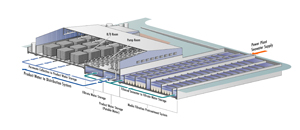
It is a process that turns ocean water into fresh drinking water by removing salt and impurities. The process involves either reverse osmosis membrane or thermal distillation (evaporation) technologies. Poseidon's projects including the Carlsbad Desalination Project plant use reverse osmosis technology.
Back to Top
|
Click on image to enlarge |
2.
How does the reverse osmosis process work?
Water is pushed under high pressure through a semi-permeable membrane to separate salts and other solids from the water molecules. The membrane acts like a microscopic strainer that allows only the water molecules to pass thorough. The technology was developed over 30 years ago.
Back to Top
|
Click on image to enlarge |
3.
Can the salt and minerals extracted be used?
Unfortunately not. The amount of salt generated is too great to be processed at the project site while the amount of mineral is too small to justify the expense of additional processing.
Back to Top
|
4.
Does weather affect the availability of water for desalination?
No. It is a drought-proof process unaffected by rainfall or other weather conditions. Part of the testing done at the pilot project determined that even in the most difficult operating conditions, the process works well.
Back to Top
|
5.
Where else has desalination been successful?
Facilities similar to the one proposed for Carlsbad have been operating worldwide for several decades. Desalination is used aboard cruise ships, Navy vessels and on many small islands without natural fresh water. There are more than 21,000 desalination facilities operating worldwide.
Back to Top
|
6.
If it's so great, why aren't the more plants?
Until recently, cost has been the limiting factor. Dramatic technological improvements have made desalination much more cost-effective. For example, the reverse osmosis membranes used today last longer, use significantly less energy and cost much less than they did just a decade ago. Co-locating the plants with existing coastal power plants and using their intake and outfall facilities also results in large cost savings.
Back to Top
|
7.
How does the cost of desalination compare to other water supply solutions?
It is comparable to new or alternative resources such as recycling, reuse and aggressive conservation. Costs for alternative water resources can range from $600 to $1,200 per acre-foot. The Carlsbad project produce drinking water a $861 per acre-foot. One acre-foot (enough to cover one acre, one foot deep) can typically supply a family of four's needs for one year. Since the costs of alternative supplies keep rising while the cost of desalination keeps dropping, desalination is an economically prudent long-term investment.
Back to Top
|
8.
What is the quality of the water produced?
The desalinated water will meet or exceed all local, state and federal standards for drinking water. Desalination produces some of the highest quality drinking water in the world. The same reverse osmosis process is used by bottling plants to produce premium drinking water from a number of sources.
Back to Top
|
|
|